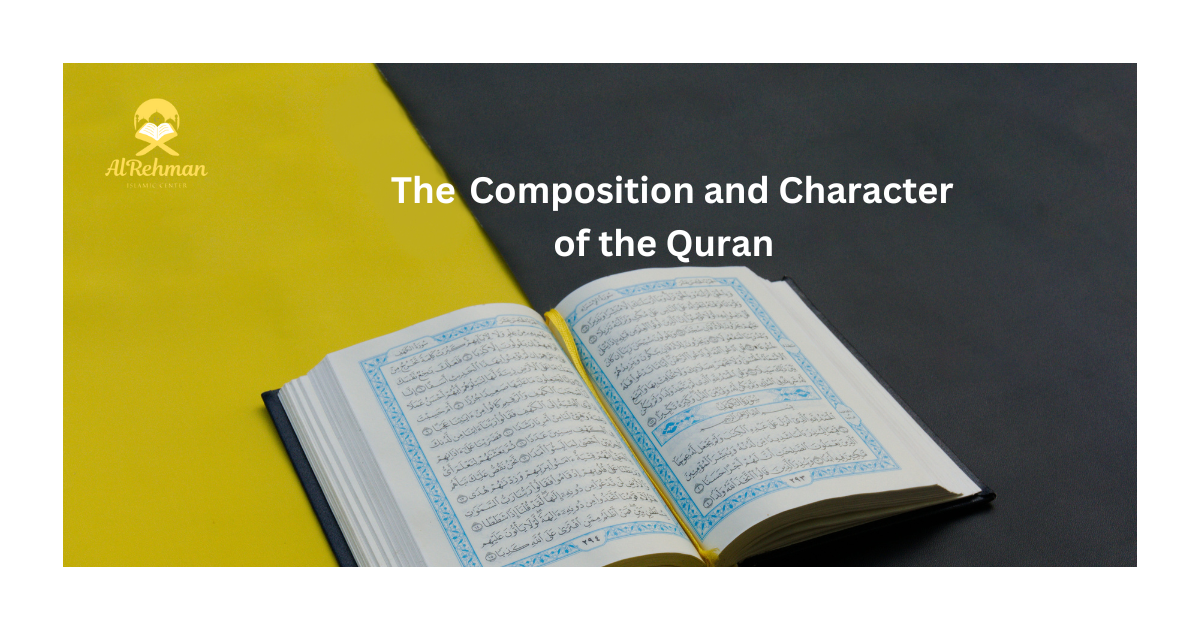
The Composition and Character of the Quran
Table of Contents
Introduction
The Quran is the sacred book of Islam, cherished by Muslims as the literal word of Allah, revealed to Prophet Muhammad (PBUH) over 23 years. Its composition and character of the Quran reflect its unique structure, profound themes, and divine essence. With 114 chapters (Surahs) and over 6,000 verses (Ayat), the Quran follows a specific divine order rather than a chronological sequence. What makes it truly remarkable is its inimitable nature (I’jaz), deep messages, and extraordinary beauty of language.
For Muslims, the Quran is more than just a religious text—it is a complete guide for life, covering faith, law, morality, and social justice. It shapes beliefs, influences societies, and provides timeless wisdom. Understanding its composition and character of the Quran is valuable not only for Muslims but for anyone seeking insights into Islamic teachings, the preservation of divine revelation, and the composition and character of the Quran is lasting impact on civilization, law, and ethics.
Recommended: Explore the principles of Islam and achieve proficiency in the Quran.
1. The Composition of the Quran
The Revelation and Compilation
How the Quran Was Revealed Over 23 Years
The Quran wasn’t revealed all at once—it came gradually over 23 years, shaping the early Muslim community, strengthening their faith, and guiding them through different circumstances. Each revelation had a purpose, responding to real-life questions, challenges, and divine instructions. This step-by-step approach wasn’t just about delivering guidance; it allowed believers to grow spiritually and socially, making it easier for them to absorb and implement Allah’s commands in their daily lives.
Role of Angel Jibreel (Gabriel)
Angel Jibreel (Gabriel) was the noble messenger chosen by Allah to deliver His divine words to Prophet Muhammad (PBUH). With unwavering dedication, he ensured that every revelation reached the Prophet (PBUH) exactly as intended. The Prophet (PBUH), in turn, would carefully repeat the verses after Jibreel, committing them to heart before passing them on to his companions. Through this sacred process, the Quran was not only preserved but also deeply embedded in the hearts of the believers.
Preservation During the Prophet Muhammad’s (PBUH) Time
During the lifetime of Prophet Muhammad (PBUH), his companions took great care to preserve the Quran. Many memorized it by heart, earning the title of Hafiz, while others carefully wrote it down on whatever materials were available—palm leaves, bones, and parchments. To ensure accuracy, the Prophet (PBUH) personally appointed scribes to record each revelation. This dedication created both a strong oral tradition and a written record, safeguarding the composition and character of the Quran for generations to come.
Compilation During Caliphs Abu Bakr and Uthman (RA)
After the passing of the Prophet (PBUH), Caliph Abu Bakr (RA) took a crucial step to preserve the composition and character of the Quran. Concerned about its safekeeping, especially after many of its memorizers had been martyred in battle, he entrusted Zaid ibn Thabit (RA), one of the Prophet’s chief scribes, with the immense responsibility of compiling it into a single manuscript. Years later, during the caliphate of Uthman (RA), the need for consistency in recitation across different regions became evident. To prevent discrepancies, he ordered the production of standardized copies, which were then distributed far and wide, ensuring the composition and character of the Quran remained unchanged for generations to come.
Recommended: When Was the Quran Written?
The Structure of the Quran
114 Surahs and Their Classification (Makki & Madani)
The Quran is made up of 114 Surahs (chapters), each with its own unique message and purpose. These Surahs are classified into two categories: Makki and Madani. The Makki Surahs, revealed in Makkah, mainly emphasize faith, the oneness of Allah, and the afterlife, offering deep spiritual guidance. On the other hand, the Madani Surahs, revealed in Madinah, focus more on laws, social structures, and governance, providing practical guidance for building and organizing the Islamic community.


Arrangement of Verses (Ayat) and Chapters (Surahs)
The composition and character of the Quran isn’t arranged in chronological order but follows divine wisdom. Each Surah has its own themes and lessons, with verses (Ayat) carefully structured to keep the message clear and impactful. This arrangement weaves different aspects of guidance throughout the text, making it a source of wisdom and reflection.
The Concept of Divine Arrangement vs. Chronological Order
Unlike typical historical records, the Quran isn’t arranged in chronological order. Instead, its structure follows a divine pattern, weaving together themes in a way that reinforces key messages. This unique arrangement allows important teachings to appear in different contexts, making them easier to understand, reflect upon, and internalize.
Recommended: When Was The Quran Revealed?
The Language and Style of the Quran
Classical Arabic and Its Unparalleled Eloquence
The composition and character of the Quran is written in Classical Arabic, a language renowned for its depth, eloquence, and precision. Its powerful and poetic style has shaped Arabic literature for centuries and continues to stand unmatched in its rhetorical brilliance.
Unique Prose That Is Neither Poetry Nor Normal Prose
The composition and character of the Quran is unlike poetry or regular prose. Its rhythm flows beautifully, yet every word carries deep meaning, captivating listeners and leaving a lasting impact. This unique style not only makes it memorable but also reflects its divine nature, setting it apart in a way that cannot be replicated.
Repetitions, Rhetorical Devices, and Linguistic Miracles
The Quran uses powerful rhetorical devices like metaphors, allegories, and repetitions to highlight important lessons. These linguistic elements not only make its message more impactful but also add to its literary beauty, reinforcing its divine origin and ensuring its wisdom continues to inspire people across generations.
Recommended: Deepen your faith and understanding of the Quran.
2. The Character of the Quran
Divine Nature and Inimitability (I’jaz al-Qur’an)
Why the Quran Is Considered the Literal Word of Allah
Muslims firmly believe that the Quran is the direct and unaltered word of Allah, revealed to Prophet Muhammad (PBUH) through Angel Jibreel (Gabriel). Unlike other religious texts that have been changed or altered over time, the composition and character of the Quran has remained perfectly preserved in its original form for more than 1400 years. Its divine nature shines through its linguistic beauty, deep wisdom, and powerful influence on both individuals and societies. The Quran covers all aspects of life—faith, morality, law, and spirituality—offering timeless guidance for all of humanity.
Challenge to Humanity (Surah Al-Baqarah 2:23-24)
The Quran poses a profound challenge to humanity, especially in Surah Al-Baqarah (2:23-24), where Allah calls upon people to produce even a single chapter like it if they have any doubt about its divine origin. Despite the rich Arabic literary heritage and the presence of exceptionally eloquent poets at the time of its revelation, no one has ever been able to meet this challenge. The composition and character of the Quran is unmatched linguistic beauty, profound meanings, and life-changing impact continue to stand as proof of its divine nature. This challenge isn’t just about poetic excellence—it’s about the depth of wisdom, knowledge, and guidance woven into every verse.
Recommended: Improve your Quran recitation through Tajweed.
Themes and Messages of the Quran
Monotheism (Tawheed), Prophethood, and Afterlife (Akhirah)
The Quran’s core message revolves around Tawheed—the absolute oneness of Allah—which forms the very foundation of Islamic belief. It firmly rejects polytheism, idolatry, and the idea of associating partners with Allah, emphasizing that He alone is the Creator, Sustainer, and ultimate Judge of everything in existence.
Alongside this, the Quran repeatedly highlights the role of prophets as divinely chosen messengers sent to guide humanity. It recounts the stories of Prophet Adam, Nuh (Noah), Ibrahim (Abraham), Musa (Moses), Isa (Jesus), and, finally, Prophet Muhammad (PBUH), showing how they all carried the same essential message—worshiping and submitting to the one true God.
Another key theme is the afterlife (Akhirah), where every soul will be accountable for its deeds. The Quran paints vivid images of Jannah (Paradise), a place of eternal bliss for the righteous, and Jahannam (Hell), a consequence for those who reject the truth. This belief in the afterlife serves as a powerful reminder that our actions in this world are not without consequence—they shape our eternal destiny and encourage us to live with moral responsibility and purpose.
Moral and Ethical Guidance
The composition and character of the Quran provides a clear and practical moral framework, guiding individuals toward a life of integrity and righteousness. It emphasizes core values such as:
- Honesty and truthfulness – Encouraging people to be sincere in their words and actions while avoiding lies, deceit, and fraud.
- Kindness and compassion – Urging care and empathy, especially towards parents, neighbors, and those in need.
- Justice and fairness – Promoting the protection of rights and the elimination of oppression.
- Patience and perseverance – Teaching resilience in the face of hardships and trials.
- Humility and gratitude – Encouraging recognition of Allah’s blessings while steering away from arrogance.
The Quran firmly condemns lying, cheating, oppression, arrogance, and injustice, shaping individuals with strong moral character and self-discipline. These ethical principles serve as a foundation for a meaningful and successful life, ultimately fostering a just and compassionate society.
Social Justice, Family Laws, and Human Rights
The Quran isn’t just a book of personal morals; it lays the foundation for a just and compassionate society. It emphasizes fairness, kindness, and the protection of those who are vulnerable. Social justice is a key theme, guiding everything from economic fairness—like the prohibition of usury (riba)—to the encouragement of charity (Zakat and Sadaqah) to ensure that those in need are supported.
When it comes to family life, the composition and character of the Quran provides clear principles to create harmony and responsibility within relationships:
- Marriage is built on love, respect, and mutual duties between spouses.
- Parenting comes with the responsibility of raising children with proper care, education, and guidance.
- Inheritance laws ensure that wealth is distributed fairly among heirs, preventing disputes and injustice.
Beyond family and economy, the Quran also upholds fundamental human rights. It advocates for the rights of women, the protection of orphans, and the fair treatment of workers and the oppressed. These principles have not only shaped Islamic legal systems but have also left a lasting impact on civilizations throughout history.
Recommended: What is the purpose of life in Islam?
Impact and Influence of the Quran
Spiritual and Personal Transformation
The Quran is not just a book of laws—it’s a profound spiritual guide that has the power to change lives. Its verses bring:
- Inner peace and tranquility (through remembrance of Allah)
- Hope and reassurance (especially during hardships)
- Motivation for self-improvement and repentance
Countless people have experienced deep personal transformations by embracing the teachings of the Quran. It has led them to a life of faith, patience, gratitude, and devotion. More than just words, the Quran is a source of comfort, healing, and strength, guiding both individuals and entire communities toward a path of righteousness.
Influence on Law (Shariah), Science, and Civilization
The Quran has played a pivotal role in shaping Islamic civilization, influencing fields such as:
- Law (Shariah): The Quran is the primary source of Islamic law (Shariah), forming the foundation of legal principles related to justice, contracts, crime, and social ethics. It promotes fair governance, legal accountability, and the protection of rights.
- Science: Many Quranic verses allude to scientific phenomena, inspiring Muslim scholars to explore fields such as:
- Astronomy (celestial bodies, the expansion of the universe)
- Embryology (stages of human development)
- Geology (formation of mountains, water cycles)
- Medicine (concepts of hygiene, disease prevention)
- Civilization and Culture: The Quran has also influenced Islamic art, literature, architecture, and philosophy. Calligraphy, Quranic manuscripts, and architectural marvels such as the Alhambra, Dome of the Rock, and Islamic geometric designs reflect its impact on global heritage.
Quran’s Memorization and Preservation by Millions
The Quran holds a unique place in the world as the most memorized book, with millions of people, known as Hafiz, committing its verses to memory word for word. This beautiful oral tradition has been passed down through generations, ensuring that the Quran remains unchanged and preserved just as it was revealed over 1400 years ago.
- Children and adults alike dedicate their lives to memorizing the Quran, ensuring its preservation.
- Even those who do not speak Arabic fluently memorize the Quran, further demonstrating its miraculous nature.
- This widespread memorization serves as a divine safeguard against distortion, ensuring that the Quran remains as pure as when it was first revealed.
In addition to memorization, written copies of the Quran have been meticulously preserved and distributed across the world, ensuring that its message remains accessible to all.
Recommended: Let’s make Islamic education enjoyable for children.
Conclusion
The composition and character of the Quran beautifully reflect its divine origin, unique structure, and profound influence on humanity. As the final revelation from Allah, it isn’t just a book—it’s a complete guide for life, offering wisdom on spiritual, moral, legal, and social matters.
For more than 1,400 years, the Quran has touched hearts, transformed lives, and shaped entire civilizations. Its guidance has influenced knowledge across various fields, while its miraculous preservation stands as undeniable proof of its unchanging divine message.
Even today, the Quran continues to inspire millions around the world. Studying its verses strengthens faith, deepens understanding, and promotes the universal values of peace, justice, and wisdom.
Frequently Asked Questions
1. What is the difference between Makki and Madani Surahs?
Makki Surahs were revealed in Makkah before the Hijrah (migration) and primarily focus on faith, monotheism (Tawheed), the afterlife, and moral values. They are generally shorter and more rhythmic. Madani Surahs, revealed after the migration to Madinah, emphasize laws, social justice, governance, and community regulations, addressing the needs of the growing Muslim society.
2. Why is the Quran considered inimitable (I’jaz al-Qur’an)?
The Quran’s linguistic perfection, profound meanings, and unmatched eloquence make it impossible for anyone to produce even a single chapter like it. This challenge, found in multiple verses (e.g., Surah Al-Baqarah 2:23-24), has remained unmet despite centuries of literary and intellectual efforts, proving its divine origin and uniqueness.
3. How does the Quran guide daily life?
The Quran provides spiritual, moral, social, and legal guidance, covering every aspect of life. It teaches honesty, kindness, patience, and justice, offering solutions for personal development, family relationships, financial ethics, and societal well-being. By following its teachings, believers can lead a righteous, balanced, and fulfilling life while strengthening their connection with Allah.
4. What role does Angel Jibreel (Gabriel) play in the revelation of the Quran?
Angel Jibreel was the divine messenger who conveyed the words of Allah to Prophet Muhammad (PBUH) over 23 years. He ensured that every revelation was delivered precisely and accurately, guiding the Prophet in understanding and preserving Allah’s message. Jibreel’s role was essential in maintaining the purity and authenticity of the Quran.
5. How has the Quran been preserved without alteration?
The Quran has been preserved through a dual method: oral memorization and written documentation. From the time of the Prophet (PBUH), companions memorized the entire Quran (Hafiz) and wrote it on palm leaves, bones, and parchment. Later, it was compiled into a single book under Caliph Abu Bakr (RA) and standardized under Caliph Uthman (RA). Today, millions of people continue to memorize the Quran, ensuring its exact transmission without any changes for over 1400 years.