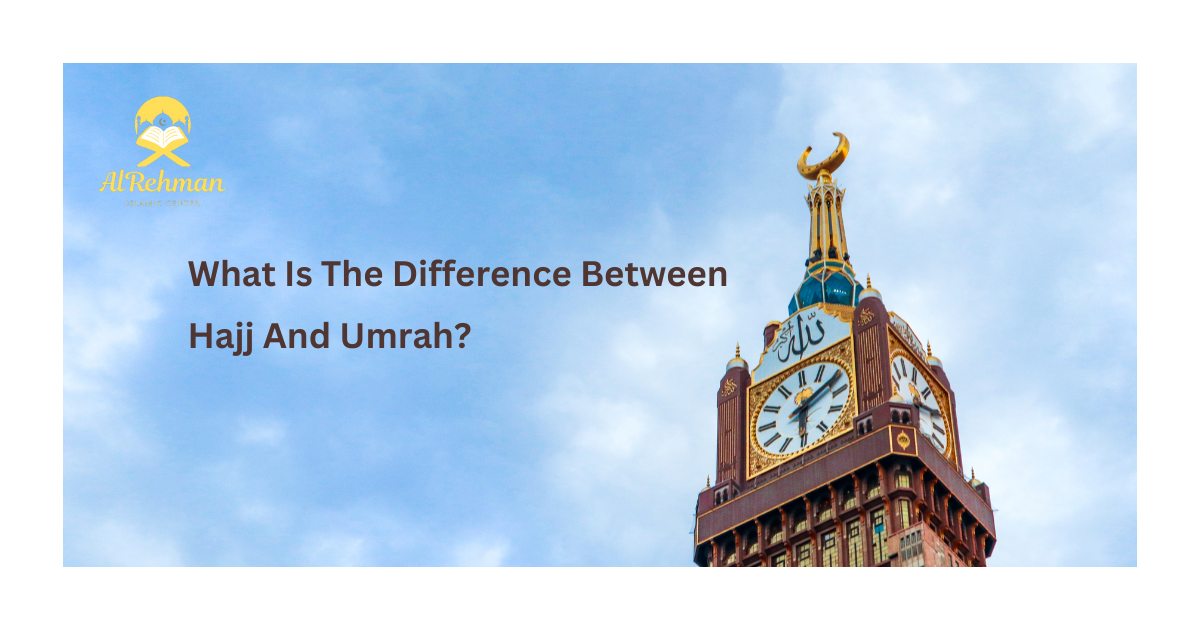
What Is The Difference Between Hajj And Umrah?
Table of Contents
Introduction
Hajj and Umrah are both deeply significant pilgrimages in Islam, but they differ in important ways. The most obvious differences are in their obligation, timing, and the rituals involved. Hajj is a mandatory pilgrimage that every Muslim who is physically and financially able must undertake. It takes place during specific days in the Islamic month of Dhul-Hijjah. On the other hand, Umrah is a voluntary pilgrimage, which can be performed at any time of the year.
Both pilgrimages are spiritually enriching, offering immense rewards and holding great significance in Islam. Pilgrimage in Islam is more than just a physical journey; it represents unity, devotion, and complete submission to Allah. Muslims from around the world come together in the holy city of Makkah, setting aside the distractions of daily life to draw closer to their Creator. Through both Hajj and Umrah, Muslims seek spiritual purification, with the hope that their sins will be forgiven and that they will strengthen their bond with Allah.
Recommended: Explore the principles of Islam and achieve proficiency in the Quran.
What is Hajj?
Hajj is one of the Five Pillars of Islam, meaning it’s an essential act of worship for every Muslim who is able—both physically and financially. It’s a pilgrimage to Makkah, Saudi Arabia, that takes place every year during the Islamic month of Dhu al-Hijjah. This journey is much more than a physical trip; it’s a deeply spiritual experience. It’s a way for Muslims to obey Allah’s command and show their complete submission to Him.
A key aspect of Hajj is the powerful message of unity and equality it sends. No matter a person’s race, nationality, wealth, or social status, all Muslims are required to wear the same simple white clothes, called ihram. This simple attire erases any outward signs of wealth or social rank, symbolizing the core belief that, in the eyes of Allah, all believers are equal. As millions of Muslims come together for this sacred pilgrimage, it highlights the global bond of brotherhood within Islam and the shared faith that unites all Muslims.
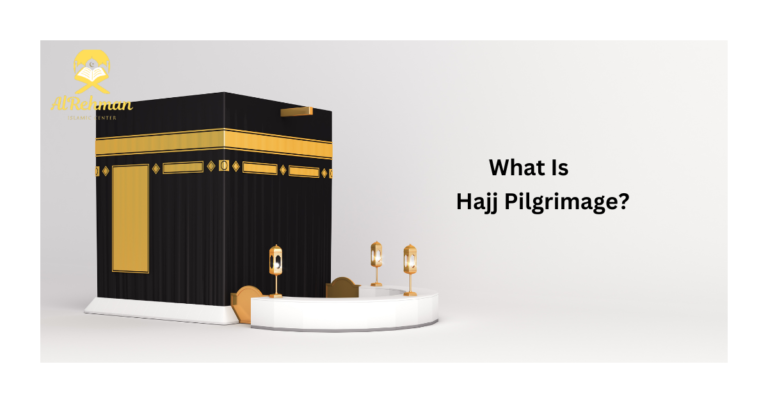
Recommended: What Is Hajj Pilgrimage?
What is Umrah?
Umrah, often called the “lesser pilgrimage” when compared to Hajj, is a deeply cherished and voluntary act of worship in Islam. Unlike Hajj, which must be performed during specific dates and is obligatory for those who meet certain criteria, Umrah can be undertaken at any time throughout the year. It’s not a requirement, but for those who are able, it carries immense spiritual value and is strongly encouraged.
One of the beautiful aspects of Umrah is its power to bring Muslims together, no matter their background or where they come from. Much like Hajj, it unites people from all over the world, all with the same goal: to worship and seek closeness to Allah. Standing side by side in prayer in these sacred places creates a profound sense of unity, highlighting the shared bond among all Muslims and the collective commitment to follow Allah’s guidance.
Recommended: Let’s make Islamic education enjoyable for children.
Key Differences Between Hajj and Umrah
1. Obligation: Fard vs. Sunnah
Hajj is a deeply significant act of worship in Islam, one that every Muslim who is physically and financially able should aim to fulfill at least once in their lifetime. It is one of the Five Pillars of Islam, meaning it is a fundamental duty for all Muslims. On the other hand, Umrah is a highly recommended practice, or sunnah, that carries immense spiritual benefits. While it’s not a compulsory act like Hajj, Muslims are encouraged to perform Umrah for the rewards it offers, though it isn’t required by law.
2. Timing: Specific Days vs. Anytime
Hajj is a special pilgrimage that must take place during specific days in the Islamic month of Dhul-Hijjah, particularly between the 8th and 12th days. These dates are fixed and play a key role in the ritual. On the other hand, Umrah is more flexible—there’s no set time for it, so Muslims can perform it at any point throughout the year whenever it suits them.
Recommended: What is sawm and why is it important?
3. Duration: Long vs. Short
Hajj is a deeply significant journey that spans several days—usually about five or six—during which pilgrims engage in a series of rituals. These include stays at Mina, Arafat, and Muzdalifah, each with its own sacred significance. On the other hand, Umrah is a more compact pilgrimage that can be completed in just a few hours. It involves fewer rituals, such as performing the Tawaf (circumambulation of the Kaaba), the Sa’i (walking between the hills of Safa and Marwah), and the act of trimming or shaving the hair. While Hajj is a time-consuming journey, Umrah is more flexible, offering a shorter, but still spiritually enriching, experience.
4. Rituals: Arafat, Mina, Muzdalifah vs. Tawaf and Sa’i
Hajj is a more involved pilgrimage that includes several important rituals that aren’t part of Umrah. These include standing at Arafat to pray, spending the night in Mina, and gathering at Muzdalifah. These extra rituals make Hajj a more intense and comprehensive experience. On the other hand, Umrah is a shorter journey, mostly centered around two main actions: Tawaf, where pilgrims circle the Kaaba, and Sa’i, where they walk between the hills of Safa and Marwah.
5. Cost: Higher vs. Lower
Hajj is often more expensive because it takes longer and requires more preparation, such as staying in Makkah for several days, arranging transportation, and managing the large number of pilgrims. On the other hand, Umrah is usually more affordable since it’s shorter in duration and doesn’t involve as many logistical challenges, making it an easier option for many Muslims who wish to perform it.

Recommended: Deepen your faith and understanding of the Quran.
Similarities Between Hajj and Umrah
Common Rituals: Ihram, Tawaf, Sa’i
Hajj and Umrah, while distinct in their significance, share some deeply meaningful rituals that are central to both pilgrimages. One of the first acts in both journeys is entering a state of spiritual purity called Ihram. This involves putting on simple, white garments (for men) and a modest dress for women, symbolizing humility and equality before Allah, while also helping the pilgrim shed the distractions of daily life and focus entirely on their devotion.
Another essential ritual in both pilgrimages is Tawaf, where pilgrims circle the Kaaba in Makkah seven times, moving in a counter-clockwise direction. This act represents the unity of all believers in worshipping the One God, Allah, and highlights the Kaaba’s central role in the lives of Muslims around the world.
Following Tawaf is the Sa’i, a ritual where pilgrims walk back and forth seven times between the hills of Safa and Marwah. This commemorates the determination and faith of Hajar, the wife of Prophet Ibrahim, as she searched for water for her son, Isma’il. It’s a practice observed by both Hajj and Umrah pilgrims, symbolizing patience, devotion, and a deep connection to the history of Islam.
Recommended: Improve your Quran recitation through Tajweed.
Spiritual Benefits
Both Hajj and Umrah are incredibly meaningful acts of worship, offering deep spiritual rewards that are cherished by Muslims around the world. One of the greatest benefits of these pilgrimages is the forgiveness of sins. The Prophet Muhammad (peace be upon him) shared that performing either Hajj or Umrah, with sincerity and devotion, can wipe away a person’s past mistakes, providing a fresh start. This makes both pilgrimages a beautiful chance for spiritual renewal, allowing believers to draw closer to Allah and purify their hearts.
Beyond the forgiveness of sins, these sacred journeys offer a profound sense of spiritual upliftment. They offer moments for deep reflection, humility, and heartfelt supplications to Allah. Many who embark on Hajj and Umrah return with a stronger faith and a renewed commitment to the teachings of Islam. The shared experience of worshiping with millions of other Muslims fosters a powerful sense of unity and brotherhood, strengthening the bonds of the ummah (the Muslim community).
At their core, both Hajj and Umrah are acts of immense virtue and spiritual importance. They present Muslims with an opportunity to cleanse their souls, deepen their relationship with Allah, and earn immeasurable rewards, both in this life and in the Hereafter.
Recommended: What is the purpose of life in Islam?
Why Perform Hajj or Umrah?
Rewards and Virtues in Islam
Performing Hajj or Umrah is a deeply rewarding spiritual experience. Hajj, as one of the Five Pillars of Islam, is a mandatory act for Muslims who are physically and financially able to undertake it. It holds immense significance because it cleanses a person from all past sins. The Prophet Muhammad (peace be upon him) emphasized that a sincere Hajj can wipe away previous wrongdoings, offering a fresh start.
While Umrah is not a compulsory duty, it still holds great value and brings countless rewards. It offers forgiveness and helps cleanse a person from sins. Although not obligatory, Umrah is highly recommended, as it is a beautiful opportunity to earn Allah’s mercy and deepen one’s connection with Him.
Recommended: What is sawm and why is it important?
Spiritual Renewal
Both Hajj and Umrah offer a beautiful opportunity for spiritual renewal. They allow Muslims to pause and reflect, seeking forgiveness for past mistakes and growing closer to Allah. The rituals of these pilgrimages are deeply meaningful, helping to purify the soul and strengthen one’s faith. For many, the experience becomes a powerful moment of personal reflection, where they recommit to their beliefs and cleanse their hearts. The impact of these journeys is profound, guiding Muslims toward a life of greater righteousness and a deeper, more sincere connection with Allah.
Recommended: What Is Zakat In Islam?
Conclusion
Hajj and Umrah do have some common ground, but they differ in several key aspects, such as whether they’re obligatory, when they take place, how long they last, the rituals involved, and the cost. Both hold immense spiritual value in Islam, giving Muslims a meaningful chance to grow spiritually and strengthen their connection with Allah.
Frequently Asked Questions
1. Can Umrah Replace Hajj?
Umrah is a beautiful and rewarding act of worship, but it cannot replace Hajj. Hajj is one of the five pillars of Islam and is a mandatory duty for Muslims who are physically and financially able to perform it, at least once in their lifetime. It has specific dates and includes certain rituals that aren’t part of Umrah. While Umrah is highly recommended and carries great rewards, it’s a voluntary act of worship and cannot fulfill the obligation of Hajj.
2. How Many Times Can Hajj or Umrah Be Performed?
Hajj is a once-in-a-lifetime obligation for those who are physically and financially able to undertake the journey. However, it can be repeated as a voluntary act of worship whenever desired. Umrah, on the other hand, is not tied to specific dates and can be performed multiple times throughout the year. Many Muslims choose to perform Umrah several times, seeking to earn extra rewards and deepen their spiritual purification.
3. Which is More Rewarding: Hajj or Umrah?
Hajj is one of the Five Pillars of Islam, making it a deeply significant and mandatory act of worship for Muslims who are physically and financially able to undertake it. For many, it’s a once-in-a-lifetime opportunity, offering immense spiritual rewards and a profound connection to their faith. On the other hand, Umrah, while not obligatory, is also incredibly rewarding. It brings great spiritual benefits, particularly as it serves to help cleanse and absolve sins. Although Hajj holds a higher status and carries greater rewards due to its obligations, Umrah is still seen as a highly virtuous act that brings Muslims closer to Allah.