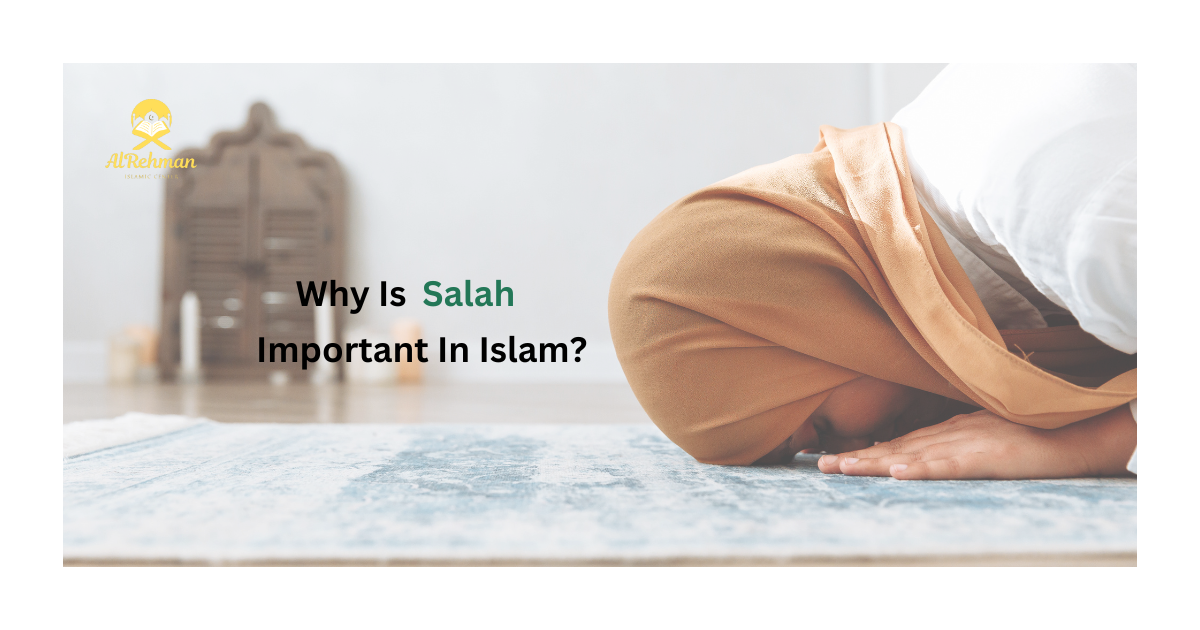
Why Is Salah Important In Islam?
Table of Contents
Introduction
Salah, often referred to as Salat or simply prayer, is one of the five fundamental pillars of Islam. Salah stands as one of the most essential practices that defines a Muslim’s relationship with Allah (SWT). Why is salah important in Islam because salah cannot be overemphasized—it is not just a ritual act but a profound act of worship, guiding Muslims through daily life. Salah is a direct means of communication between Muslims and their Creator, allowing for reflection, guidance, and spiritual nutrition.
The act of Salah involves performing specific physical and verbal actions, including reciting verses from the Qur’an, while facing the Kaaba in Makkah, the most sacred site in Islam. The connection to the Ka’bah, known as the Qiblah, symbolizes unity among Muslims worldwide, who all pray in the same direction, showing the universal brotherhood of Islam.
In this article, we will explore the deep why is salah important in Islam, how to perform it correctly, and its many physical, mental, and spiritual benefits.
Recommended: Explore the principles of Islam and achieve proficiency in the Quran.
What are the Five Daily Prayers of Islam?
One of the most recognizable elements of Salah is the responsibility to pray five times a day, at specific times throughout the day. Each prayer has its own specified time and significance. Here is a table summarizing the five daily prayers (Salah) in Islam, their times, rak’ahs, and importance:
| Prayer | Time | Rak’ahs | Significance |
| Fajr | Performed before dawn, marking the beginning of the day | 2 obligatory (Fardh) Rak’ahs, 2 Sunnah Rak’ahs | Fajr is the first prayer of the day. It is spiritually rewarding and serves as a reminder of a fresh start and a connection with Allah. |
| Dhuhr | Prayed just after midday, when the sun has passed its zenith | 4 obligatory (Fardh) Rak’ahs, 2 Sunnah Rak’ahs before, 2 Sunnah Rak’ahs after | Dhuhr provides a midday break to refocus the mind and soul, helping Muslims remain grounded in worship among daily demands. |
| Asr | Performed in the afternoon, before sunset | 4 obligatory (Fardh) Rak’ahs, with optional Sunnah prayers | Asr is a moment to pause and reflect before the end of the working day. It serves as a reminder to maintain spiritual discipline. |
| Maghrib | Offered immediately after sunset | 3 obligatory (Fardh) Rak’ahs, 2 Sunnah Rak’ahs | Maghrib is a moment of gratitude for the day’s blessings and an opportunity to seek forgiveness for any shortcomings. |
| Isha | Performed at night, after twilight has disappeared | 4 obligatory (Fardh) Rak’ahs, 2 Sunnah Rak’ahs before or after, Witr prayer (odd-numbered Rak’ahs) | Isha is a chance to reflect on the day and its actions, with Witr offering a special prayer for seeking forgiveness and mercy before bed. |
Prayers Other Than Fardh
In addition to the Fardh (obligatory) prayers, Muslims also engage in Sunnah and Nafl prayers, which are non-compulsory and hold great rewards. Sunnah prayers are those that the Prophet Muhammad (PBUH) regularly performed and encouraged, such as the Sunnah Mu’akkadah (emphasized Sunnah), which are highly recommended before or after the Fardh prayers.
For example, two Rak’ahs before Fajr, four Rak’ahs before Dhuhr, and two Rak’ahs after Isha. Nafl prayers are optional acts of worship that can be performed at any time, offering an additional opportunity for a Muslim to earn blessings and seek closeness to Allah. Special Nafl prayers include Tahajjud (late-night prayer) and Istikhara (prayer for seeking guidance). These voluntary prayers, though not required, carry huge spiritual benefits and help a Muslim grow in affection, humility, and gratitude toward Allah.
Recommended: What is Shahada in Islam?
Why is Salah Important in Islam?
Salah is the primary means through which a Muslim maintains their relationship with Allah (SWT). It is not just a physical act of recitation and movement but serves as a spiritual tool for Muslims to seek forgiveness, express thankfulness, and continuously renew their faith. Here are the key reasons Salah is so vital:
1. A Means of Connecting with Allah (SWT)
Salah offers a direct and personal connection between Muslims and Allah. Through the recitation of Quranic verses, praise, and supplications, a Muslim expresses their dependence on Allah. It is in these moments that Muslims ask for guidance, forgiveness, and mercy, ensuring they are matched with Allah’s will.
2. Reminder of Purpose in Life
The act of Salah serves as a reminder of the greatest purpose of life: to worship and submit to Allah. It invests in Muslims the understanding that life is temporary and the top goal is to seek Allah’s pleasure. As Allah states in the Quran:
“I have not created jinn and mankind except to worship Me.” (Quran 51:56).
Recommended: Improve your Quran recitation through Tajweed.
3. A Means of Purification
Salah purifies the soul by helping Muslims seek forgiveness for their sins. Every prayer is an opportunity to turn to Allah, confess weaknesses, and start a new one, both spiritually and mentally.
4. A Source of Blessings (Barakah)
Regular prayer brings blessings to one’s life, including strength, peace, and prosperity. The reward for Salah extends beyond this life to the Hereafter, where those who observe their prayers are promised unlimited rewards.
5. Spiritual Discipline and Consistency
Salah offers Muslims structure and discipline. The regularity of prayer throughout the day promotes a sense of character and focus, reminding them of their duties towards Allah. Through this consistency, Muslims learn patience, time management, and commitment.

Recommended: What is the purpose of life in Islam?
Spiritual and Psychological Benefits of Salah
1. Connection to Allah (SWT)
Every Rak’ah and every prostration (Sujood) during Salah strengthens the connection between the worshiper and Allah. The recitation of verses from the Quran, including Al-Fatiha and other chapters, reminds Muslims of Allah’s mercy, power, and authority, investing humility and gratitude.
2. Mental Peace
Salah provides a quiet space in a heated world, acting as a form of mental and emotional reset. It’s a time to focus completely on Allah, putting aside worldly worries and concerns. The act of focusing only on worship has been shown to reduce stress and improve emotional well-being.
3. Physical Health
Salah includes several physical movements—such as standing (Qiyam), bowing (Ruku), and prostration (Sujood)—which have been shown to improve pose, flexibility, and blood circulation. These movements engage muscles, and by performing them regularly, a Muslim can maintain physical health while fulfilling a spiritual duty.

Recommended: Deepen your faith and understanding of the Quran.
The Impact of Salah on Personal Development
Regular Salah nurtures personal growth in various ways:
1. Gratitude
Salah inspires reflection and gratitude, particularly through the repeated mention of Allah’s mercy and charity.
2. Patience
The need to perform Salah at specific times teaches patience and discipline, prompting Muslims to take time out from daily life to focus on their Creator.
3. Humility
Prostration, the most humbling act in Salah, teaches Muslims to remain modest before Allah, acknowledging their dependence on Him.
4. Consistency
Salah inspires regularity, which is a foundation for developing character in other areas of life, such as work, education, and personal goals.
Recommended: Let’s make Islamic education enjoyable for children.
Conclusion
Salah is much more than a religious duty—it is an important aspect of a Muslim’s life. Salah shapes their character, maintains their connection with Allah, and provides mental, physical, and spiritual balance. For Muslims, Salah is a regular reminder of their purpose in life and their duty towards Allah. By maintaining regularity in prayer, Muslims can gain peace and stability both in this world and the Hereafter.
Frequently Asked Questions
1. Can a Muslim perform Salah without Wudu (Ablution)?
No, performing Salah requires a state of purity (Wudu). A Muslim must be in a state of ablution, which involves washing the hands, face, mouth, nose, arms, and feet to perform proper prayer. If Wudu is invalidated (e.g., due to sleep or using the restroom), a new Wudu must be made before praying.
2. Can non-Muslims perform Salah?
While Salah is a fundamental act of worship in Islam, specifically for Muslims, non-Muslims may pray or offer good choices. However, for the prayer to be valid in Islam, the person must be a Muslim and stick to the required conditions of purity, intention, and facing the Qiblah.
3. What if a Muslim misses a prayer intentionally or due to forgetfulness?
If a prayer is missed due to forgetfulness, it should be performed as soon as remembered. If missed intentionally, the person should regret it and ask for Allah’s forgiveness. There is a requirement in Islam to make up missed prayers, known as Qada, but it should be done as soon as possible. However, the intention to pray regularly and timely is important.